
Melrose City Directory Collections
The historical shelf is centered on the appointment-based, non-circulating Melrose Public Library Local History Room. It holds city directories and street lists from 1872/73 forward, with hard copies extending to the present. Its digitized partner collection makes many early volumes available without a visit, but a missing online link is not proof that no directory was printed. The library also keeps reports, maps, newspapers, yearbooks, and files that can explain a name or address found in a city directory.
| Collection | Years | Where Held | Access |
|---|---|---|---|
| Digitized Melrose city directories and street lists | 1872/73-1940, with gaps | NOBLE Digital Heritage | Online scans where linked |
| Library city directories and street lists | 1872/73 forward; hard copies to present | Melrose Local History Room | Appointment; non-circulating |
| Town and city reports | 1851-1979/80 | Local History Room and digital collections | Room access; substantial digitized run to 1970 |
| Melrose High School yearbooks | 1925-2022 | Melrose Local History Room | Room access |
| Sanborn maps | 1887-1934 | Local History Room microfilm | On-site |
For the online portion, use the NOBLE Digital Heritage directory list. It identifies volumes for 1872-73, 1874-75, 1876-77, 1878-79, 1880, 1885, 1890, 1893, 1896, 1897, 1900, 1902, 1904-08, 1910, 1912, 1914, 1916, 1918, and 1920-40, including more than one volume in some later years. Record the exact volume rather than treating this as an unbroken run.
Melrose Local History Room Access
The Local History Room is a research visit rather than a circulating shelf. Appointments are required, and the room’s material does not leave the library. Its policy calls for identification to obtain key access, pencils and note paper in the room, and staff assistance for vertical files. A first visit may include help from a reference librarian. Those limits matter when a search depends on a hard-copy gap, microfilm, or a file that has not been digitized.
The room is at 69 West Emerson Street. Its published contact details are 781-665-2313 and melref@noblenet.org. Ask about the specific directory year, street list, map, or clipping file before traveling. A request that names the address, surname variants, and date range gives staff a practical starting point without assuming a particular person appears in the material.
A capture of the city’s permit and license applications page shows a separate municipal route for existing city forms.
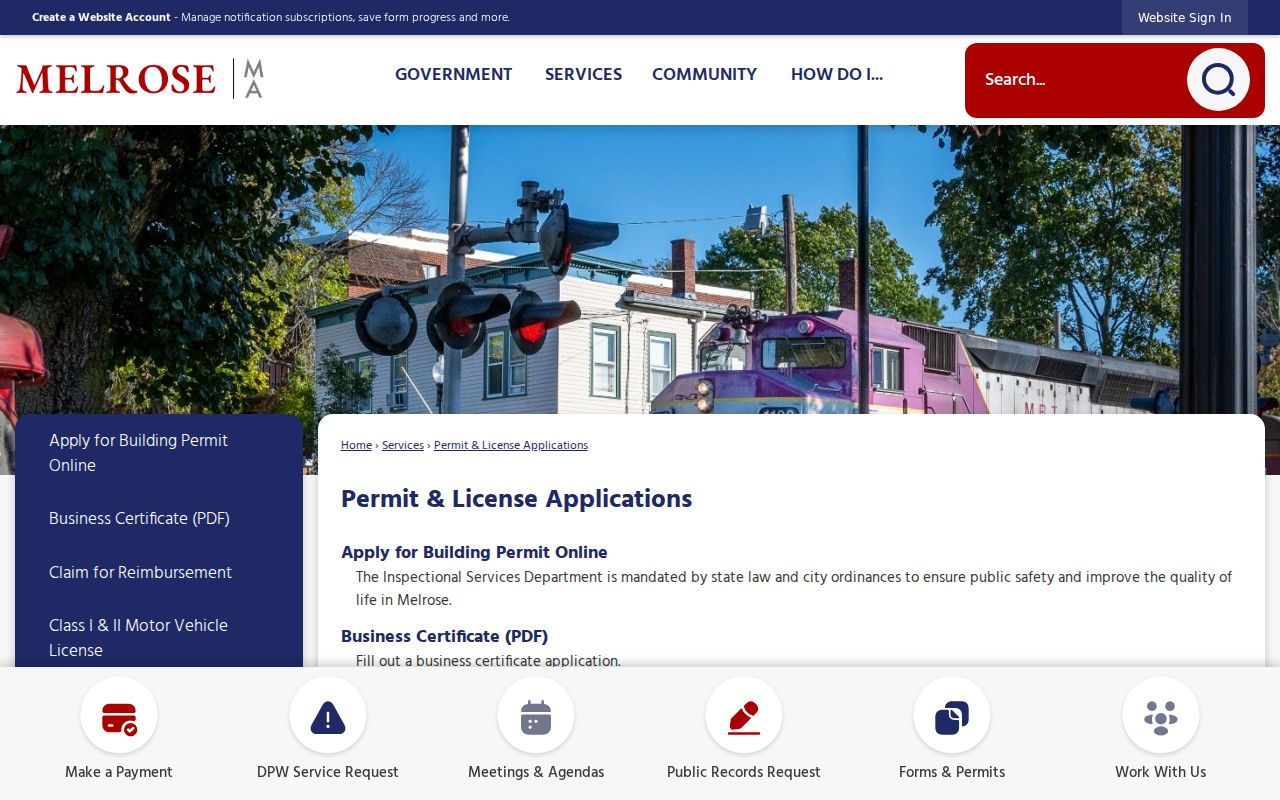
That route does not replace the historical collection: a public structured citywide register was not located, so a dated city-directory entry should remain tied to its printed source.
Note: The Local History Room is an access channel for hard-copy and staff-assisted material, not a searchable index of every historic Melrose name.
Melrose Digitized Directory Years
Digitization makes a strong starting point, especially for a surname that may recur over several volumes. Open the scan, keep the title page and page number with your notes, and check the printed abbreviation key before expanding a short form. The online city directories end with 1940 in the identified list, while the library’s hard copies continue beyond that point. The State Library directory holdings document can point to additional selected years, but it is a holdings guide, not evidence that an entry appears in a volume.
The Melrose municipal archive is another useful route when the question involves a municipal report or historical document rather than a directory page.
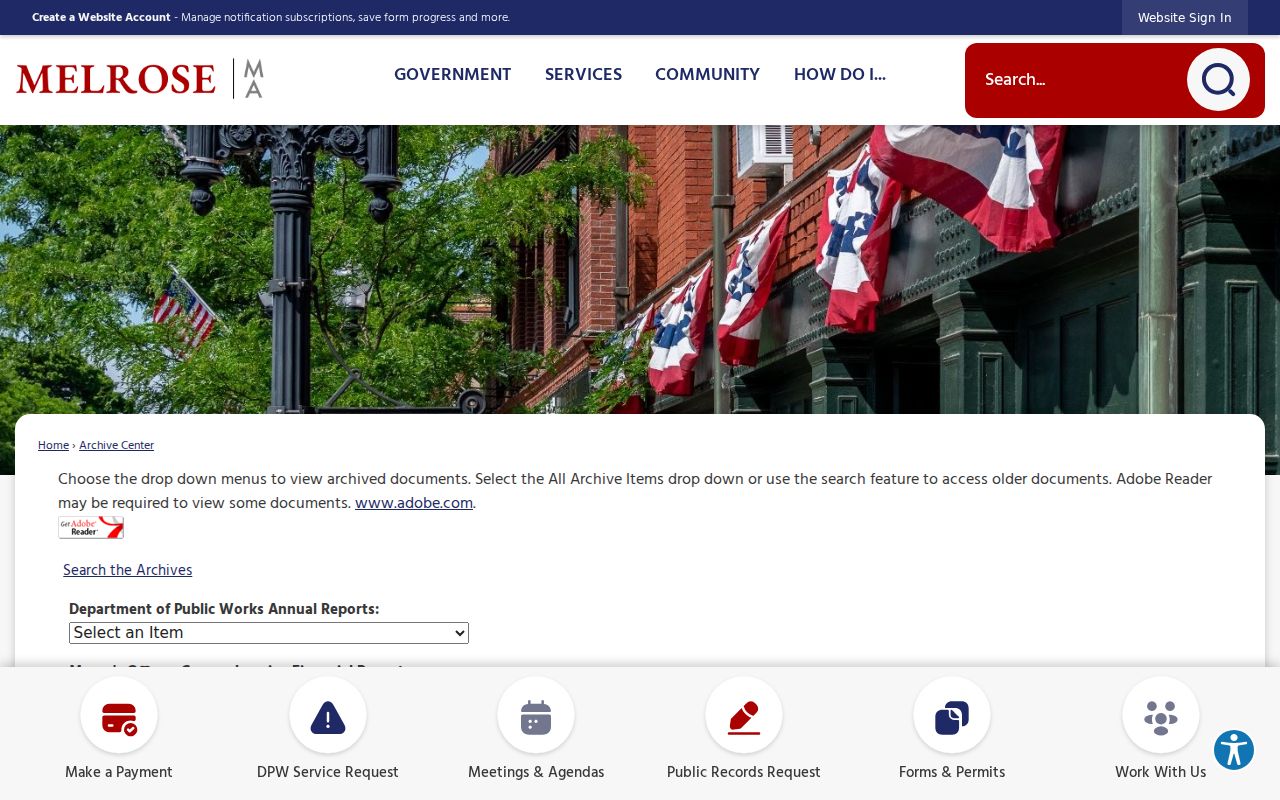
Archive material can supply civic context, but it should not be relabeled as a city directory or used to fill a directory-year gap without an identified document.
Keep three statuses in research notes: digitized scan, Local History Room hard copy, and State Library holdings lead. That simple distinction prevents a broken link from becoming a false absence.
How a Melrose Directory Entry Reads
A city directory entry is a compact publication record. It can list a surname, given name or initials, spouse or widow notation, occupation, employer or business, and a street number. Some volumes also print householder or owner-related marks. The entry image controls spelling. Transcribe the line as printed, then keep its page, volume, and year beside every later comparison. Nearby entries can be useful for identifying a household cluster, but they are not proof that everyone nearby had the same relationship.
| Name | Surname, given name, initials, and spouse or widow notation where printed. |
|---|---|
| Work or business | Occupation, employer, or a business entry when the volume includes it. |
| Address | Street and number as printed in that volume. |
| Household marks | Householder or owner-related symbol only if the volume prints one. |
| Source control | Page, volume, year, abbreviations, and neighboring entries. |
- Street-list scan
- An address-ordered or street-focused scan that can serve as a local reverse-search lead when a separate reverse title is not confirmed.
- Householder index
- An index organized around household heads when a particular volume provides one; do not assume every Melrose volume does.
- Abbreviation key
- The volume’s own explanation of shortened words and symbols. Read it before assigning meaning to a mark.
No separately titled reverse directory was confirmed in the collection description. Street-list scans and address-ordered pages are the better documented way to work backward from a Melrose address.
Melrose Rail-Era Directory Context
Melrose became an independent town in 1850 and a city in 1899. The Boston & Maine Railroad had arrived in 1845, with Wyoming Hill and Melrose Highlands stations noted in the library’s strategic-plan history. Those dates help place a directory result in a growing rail-era community instead of treating the street pattern as fixed. The first known local directory and street-list coverage begins in 1872/73, so earlier events require other sources.
- 1845: the railroad arrival documented in the library’s history provides growth context.
- 1850: Melrose became an independent town.
- 1872/73: the Local History Room’s directory and street-list coverage begins.
- 1899: Melrose became a city.
- 1940: the identified digitized directory list reaches this year, while hard-copy holdings continue.
Use the timeline as context, not a shortcut. A city directory records a publication snapshot and may lag a move, omit someone, or preserve an older address.
Trace Melrose Households by Volume
Family-history work becomes more reliable when each line is kept in sequence. Start with one scan, then move to adjacent available years rather than skipping across decades. Pair each directory year to the nearest relevant federal census, a deed, and a newspaper notice. The records answer different questions: a directory gives a dated published listing, a deed concerns recorded title, and a newspaper can add contemporaneous context. Do not state that a household is the same one until the names, address, and date support that conclusion.
- Find the surname in a digitized volume or request the closest hard-copy year from the Local History Room.
- Save the exact spelling, page, volume year, street, and every printed qualifier.
- Check the next available directory years for a move, a changed name form, or a disappearance.
- Pair the volume with the nearest relevant federal census and compare rather than merge their statements.
- Use a deed, newspaper, yearbook, report, or vertical file only for the limited fact it documents.
When an entry disappears, possible explanations include a move, death, omission, an unlisted household member, or changed publication coverage. The Local History Room has newspaper microfilm and staff-assisted files that can test some of those possibilities. Its reported newspaper runs include Record, Journal, Reporter, Weekly Visitor, and Free Press titles, but a separate obituary index was not located.
For the modern address-record chain rather than the historical shelf, use the Melrose By Street directory after recording the old directory citation.
Melrose Directory Companion Records
Several Local History Room collections help interpret a city-directory result without converting it into a current-resident claim. Town and city reports span 1851 through 1979/80. The room also holds late-nineteenth-century atlases, meeting minutes, family histories, vertical clipping and photo files, and Sanborn maps from 1887 through 1934. A map can show a building footprint or street setting, while a report can locate a civic institution in time. Neither proves who was inside a property on a later date.
The appointed boards and commissions roster is a separate civic source, not a resident roll.
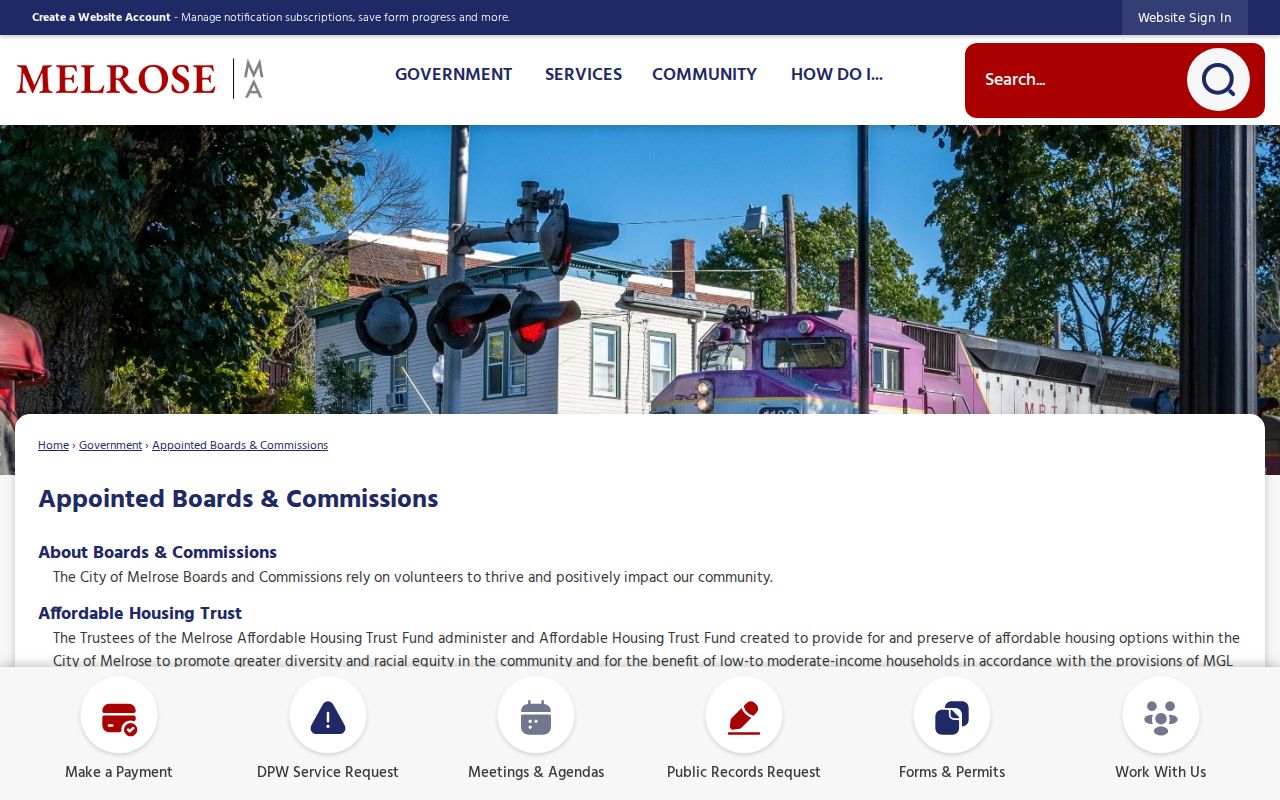
A name on a civic roster should be cited as public service context and never merged automatically with a directory household or an address.
Melrose Historical Source Boundaries
One of the most useful Melrose research habits is to keep source types apart. A city-directory line can be a strong historical lead, yet it does not prove present occupancy. Likewise, a municipal record, association listing, or deed party describes a different connection. Record the source date first and apply a confidence label to the narrow fact, not to a broad story about a person.
- High
- A direct official record or scanned item clearly identifies the same field and date.
- Moderate
- Two independent sources agree, such as a directory line and city map, without proving current status.
- Lead only
- A collection description or search hit still needs an image, volume, or custodian check.
- Unresolved
- Sources conflict, an interface is unavailable, or the relevant coverage is unknown.
- Protected/not published
- The record exists but is confidential, restricted, sealed, or unsuitable for public display.
The Melrose Community Connection is another public organizational layer, not a directory of household members.
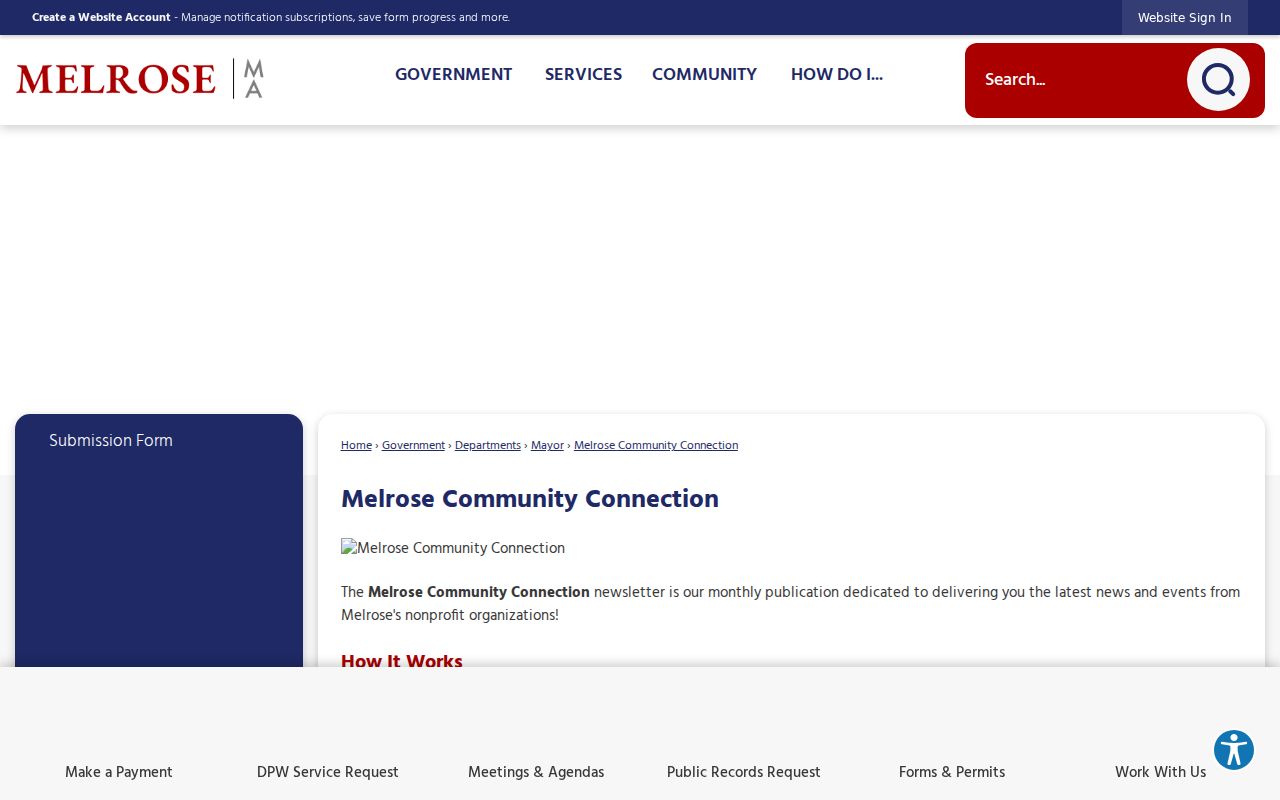
Its organizations can add civic context to an old city-directory search, but a voluntary group listing does not establish a person’s address.
Melrose Document Archive Updates
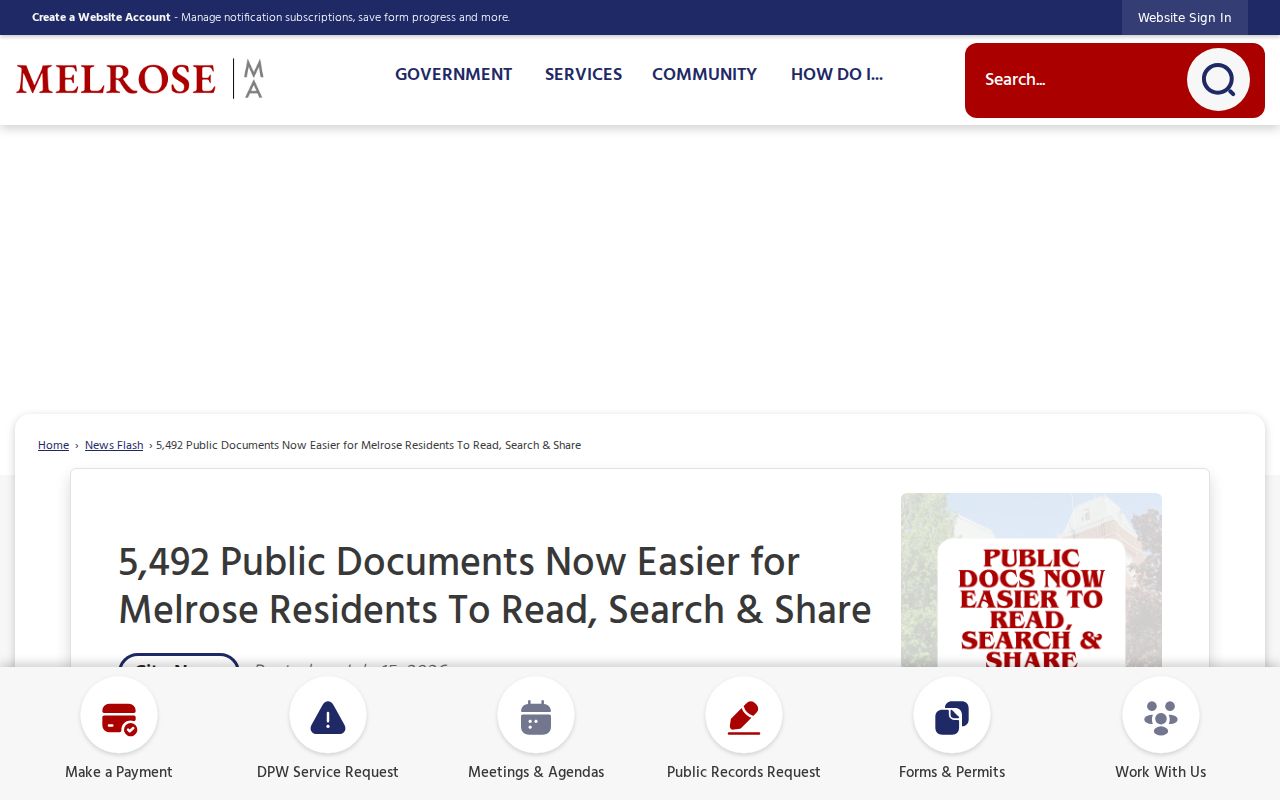
Melrose’s document access is changing, so retrieval dates belong in every research note. A July 15, 2026 city announcement said DocAccess contained 5,492 documents and 99,846 pages, including archived and legacy material. The announcement describes a searchable municipal document archive, not a complete directory index. Use it to locate a dated public document, then identify the item and its source before connecting it to a historical household.
The city’s DocAccess announcement shows the dated scope of that update.
Keep a volume year for city directories and a retrieval date for live municipal tools. That recordkeeping preserves the difference between a historic printed entry and a changing online archive.
Note: No separate obituary index was located, so newspaper microfilm and vertical files remain the documented follow-up for death notices.